 |
 |
|
 |
|
| |
 Phnom
Penh Cambodia Phnom
Penh Cambodia
Capital of
the Kingdom of Cambodia
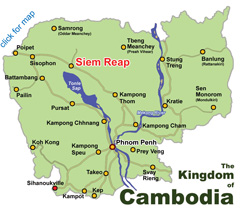
Phnom Penh is a city in the
midst of rapid change. But as skyscrapers rise and fast food
restaurants multiply, the city still offers that traditional
old mixture of Cambodian hospitality and Indochinese charm.
Set at the confluence of three great rivers - the Chaktomuk
or ‘four faces’ of the Mekong River - Phnom Penh is a city
of more than
3 million people
and the country's commercial, economic and political hub.
Though seeing significant development over the last 20
years, as a travel destination the city still has an
adventurous air - from the historic sites and
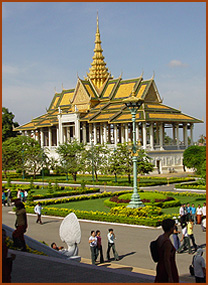 architecture,
to the boutiques and bistros
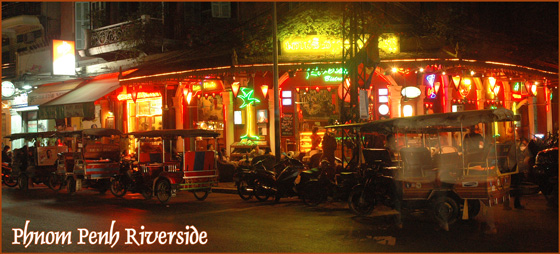
dotting the side streets, and the city’s legendary
dusk-to-dawn nightlife. architecture,
to the boutiques and bistros
dotting the side streets, and the city’s legendary
dusk-to-dawn nightlife.
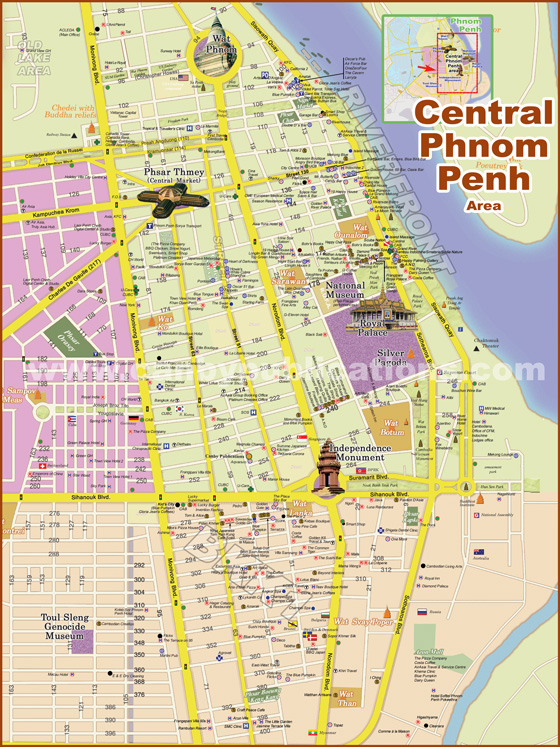
Many of the tourist areas and sights are in the old central
city near the river where you may notice classic
old French buildings in
classic colonial yellow amongst the Southeast Asian shophouses
and traditional Khmer pagodas and markets. Sights in the
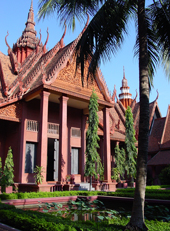
area include the ornate Royal Palace, nearby
National Museum, which is the most significant public
repository of Khmer artifacts in the country, and the
riverfront dining and shopping district. Khmer Rouge
historical sites include the
Toul Sleng Genocide Museum
and the
Choeung Ek
Memorial. outside the city. |
|
|
 |
|

|
|
Phnom Penh...
|
 Hotels
& Guesthouses Hotels
& Guesthouses
Phnom Penh offers a wide and
varied range of accommodations. Hotels and guesthouses are
spread across city, though there is a greater concentration
toward the city center, especially in Boeung Keng Kang 1
area and popular riverside area. Mid-range a/c rooms run
$15-$90/night with CTV, fridge and hot water at the low end
and well-outfitted, boutique style rooms at the top.
Business class starts at about $120. Fan & bed budget digs
can be had for $3-$10/night... (more)
Hotels
by Name *
Hotels by Location
*
Hotels by
Price |
|
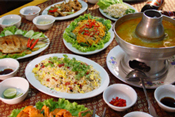
Dining & Restaurants
Phnom Penh offers the best
dining in Cambodia, with choice, depth and authenticity
exceeding the tourist towns. The Cambodian food is
made-for-the-locals authentic whether street food or 5-star
dining. There is a wide range and variety of foreign
restaurants with most western and Asian cuisines as well as
contemporary dining well represented. Given Cambodia's long
relationship with Gallic gastronomic traditions, it is no
surprise some of the best venues in town are... (more) |
|
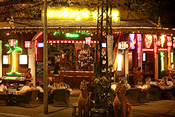 Nightlife,
Bars & Clubs Nightlife,
Bars & Clubs
Phnom Penh is a good little
party town, offering a heady dusk till dawn nightlife and a
variety of places from which to choose - dance clubs and
discos, sports bars, neighborhood pubs, hostess bars and
more. Bars and clubs are scattered across the town, but as
the city is fairly compact it’s never more than a 5 or 10
minute ride between places. Making it even easier, there are
several little clusters of bars around town allowing you to
easily hop from one to the next... (more) |
|
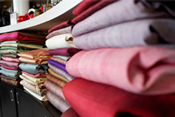 Shopping,
Markets & Boutiques Shopping,
Markets & Boutiques
Whether you're looking for
traditional Khmer handicrafts or chic contemporary fashion,
Siem Reap is an excellent place to shop for all things
Cambodian. In addition to classic Cambodian souvenirs, Siem
Reap has a unique and growing variety of contemporary art
galleries, fashion boutiques and trendy shops. Shopping
venues are scattered across the town with a concentration of
places along Sivutha Blvd., and near Phsar Chas (the Old
Market) and Pub Street... (more) |
|
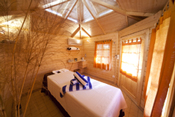 Spas
& Massage Spas
& Massage
Massage for health and
relaxation is a time-honored tradition in Southeast Asia and
Cambodia has its own distinctive massage traditions. Many
spas, massage and reflexology shops are concentrated in
tourist areas such as along the riverfront and Boeung Keng
Kang 1. Boutique spas have become quite popular, aimed
primarily at ladies and couples and offering massage, spa
and salon services in a tranquil, indulgent atmosphere. Most
offer... (more) |
|
 Getting
to, from & around Phnom Penh Getting
to, from & around Phnom Penh
The majority of international
visitors arrive in Cambodia by air at the Phnom Penh or Siem
Reap international airports. Visas are available on arrival
at both airports as well as most overland border crossings.
Phnom Penh receives direct flights from more than a dozen
Asian cities. There are also regularly scheduled air-con
buses offering direct service between Ho Chi Minh City
Vietnam and Phnom Penh that travel (see below.) Currently,
the only domestic air service... (more)
Air Schedules *
Bus Schedules *
Travel Agents
*
Maps |
|
 Sights
& Touring Sights
& Touring
Phnom Penh’s points of interest
are largely historical and cultural, but they are only part
of exploring the city. Exotic shopping, unique dining,
indulgent spas and a fair bit of nightlife complete the
Phnom Penh experience. For the sights, set aside two or
three days for the major points. Though it is possible to
squeeze the most important sights into a single day, this
leaves very little time at each location. Popular sights
include the Royal Palace and Silver Pagoda... (more)
Royal Palace *
Architecture
*
Day Trips *
Traditional Performance |
|
 Living
in Phnom Penh Living
in Phnom Penh
House/apartment rental prices
range from $150 - $3000/month but average between $200 and
$800/month, plus utilities. To find a place of your own,
spread the word, tell your Cambodian friends and
acquaintances and they will bring you lots of options. Also
check out the classified ads in the Cambodia Daily, and, if
you have the time, just drive around desirable neighborhoods
looking for 'For Rent' signs. Realty companies list rentals
and can be quite helpful... (more) |
|
 Medical
Services Medical
Services
Though the medical facilities
are still limited and in many cases not up to international
standards, there has been much improvement in recent years,
offering a greater range and quality of services. There are
a half dozen or so international clinics and foreign doctors
in town, most listed below. Calmette Hospital and the
international clinics can handle most medical problems but
serious illness or injury may still require medical
evacuation, probably to Bangkok or...
(more) |
|
 Banks
& Money Banks
& Money
Though Cambodian riel (KHR) is
the official currency, US dollars are in common use. Most
businesses, especially hotels, restaurants, airlines,
markets and souvenir shops set their prices in US dollars.
Change of less than one dollar is given in riel. Money
changers cluster around the markets and tend to give a
slightly better exchange rate than the banks. When accepting
money, inspect the bills. Marred riel is acceptable tender,
but the tiniest tear in a large US note... (more) |
|

|









 Cambodian Riel Exchange Rate